Houston water damage service
Ceiling Leak Repair in Houston, TX
Call now. A local crew will get the water out, dry it and fix the damage.
Tap to call now(817) 660-4380- Answered day or night
- Upfront pricing
- Insurance help
A ceiling leak is one of the most common calls in Houston, and one of the most misread. That brown stain or soft spot on the ceiling is the end of the trail, not the start. Water travels along framing and finds the low point before it shows, so the wet area above is usually bigger and somewhere else. Call and describe the stain or the drip. A local technician tracks down the real source, dries the cavity, and repairs the ceiling so it does not come back.
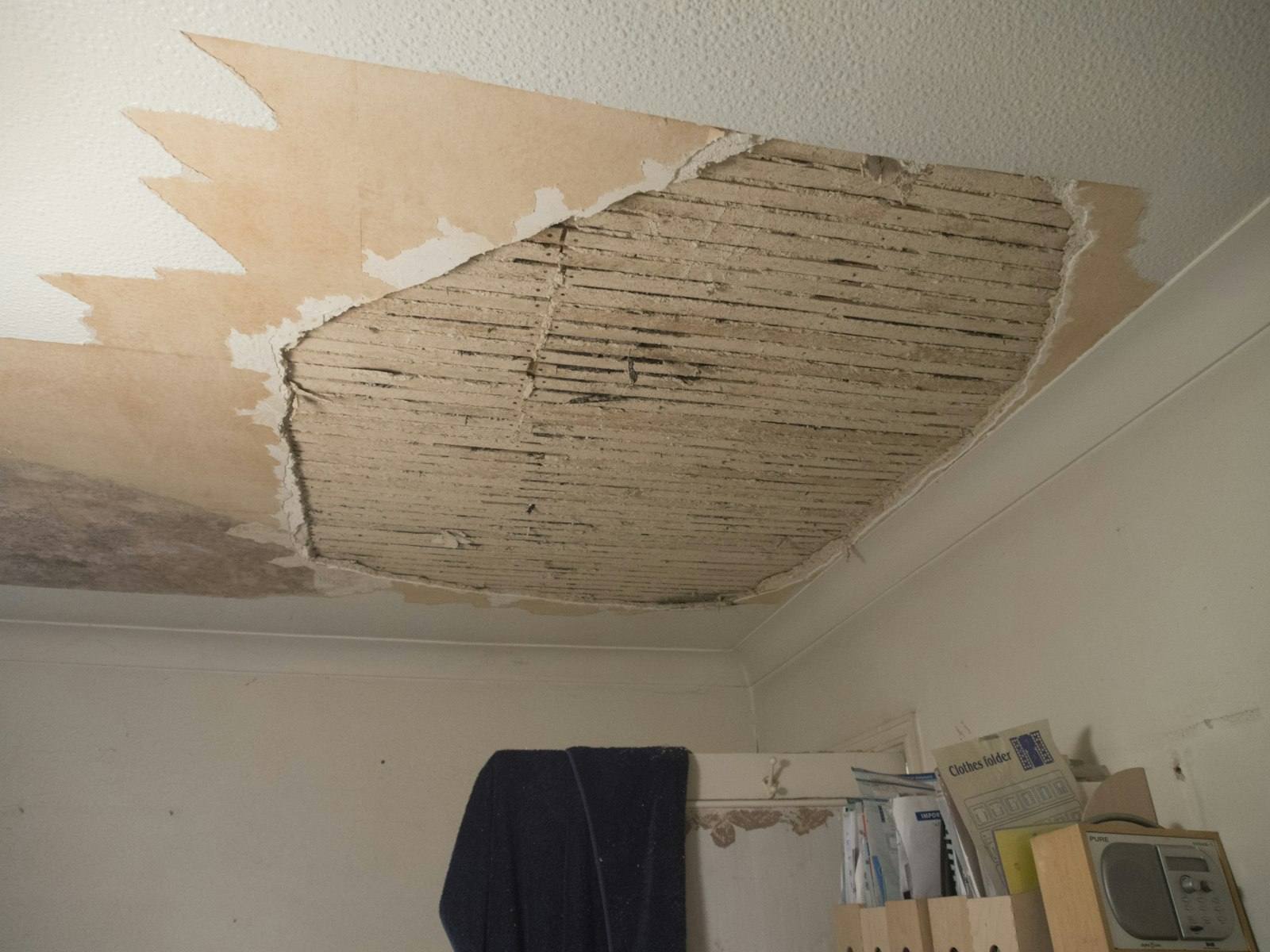
Who to call for a water leak in the ceiling
It depends on the source. A roof leak needs the roof addressed, a plumbing leak from an upstairs bathroom or AC line needs that fixed, and then the water damage itself, the wet drywall, insulation, and framing, needs drying and repair. A water damage crew handles the damage side and helps you pin down where the water is coming from.
The wrong move is to paint over a stain and hope. Sealing a wet ceiling traps moisture against the drywall and framing, and in Houston humidity that grows mold inside the cavity within days.
Common causes in Houston homes
Roof leaks are the usual suspect after Houston storms and wind, especially on older roofs and around flashing, vents, and valleys. The second big cause here is the AC system: condensate lines clog, drain pans overflow, and air handlers in the attic dump water straight onto the ceiling below. Upstairs plumbing, a toilet supply line or a tub drain, rounds out the list.
A stain with no obvious leak often points to AC condensation or an intermittent roof leak that only shows in hard, wind-driven rain. A local technician finds which one it is instead of guessing.
Call about ceiling leak repair in Houston. A local crew can get started today.
(817) 660-4380Dry the cavity, then repair
Once the source is stopped, the ceiling cavity has to dry before any patching. That can mean opening a small section, removing soaked insulation, and running air to dry the framing and the back of the drywall. Moisture readings confirm it is dry, not just dry-looking.
Then comes the repair: replace damaged drywall, re-texture to match, prime with a stain-blocking sealer so the old stain never ghosts back through, and paint. Done right, the fix is invisible and permanent.
Catch it before the ceiling falls
A small brown ring is a warning, not a wait-and-see. Drywall that stays wet loses strength, and a saturated ceiling can sag and then collapse, which is far more expensive and dangerous than the original leak. If you see a bulge holding water, place a bucket underneath and, only if it is safe, poke a small relief hole to drain it in a controlled way rather than letting it give out. Note when the stain appears, since a leak that only shows in wind-driven rain points to the roof, while one that tracks with humid weather points to the AC. Either way, acting early keeps a patch from becoming a tear-out.
Roof leak or AC leak? How to tell
The two biggest causes of Houston ceiling stains behave differently, and the pattern tells you which one you have. A roof leak usually shows up during or right after rain, especially hard, wind-driven rain, and the stain often sits near a roof penetration like a vent, chimney, or valley. An AC leak tends to appear in hot, humid weather with no rain at all, because the problem is a clogged condensate line or an overflowing drain pan at the air handler, often located in the attic directly above the stain. Plumbing leaks from an upstairs bathroom show up regardless of weather and may come and go with water use. Identifying the pattern points the repair at the real source.
What the work includes
- Leak source detection
- Roof and AC leak assessment
- Wet insulation removal
- Ceiling cavity drying
- Drywall repair and texture match
- Stain-blocking prime and paint
How it works
How the job runs
Call and inspect
Tell the crew what happened. They stop the source and map the wet areas with moisture meters and a thermal camera.
Pull the water
Pumps and extractors get standing water off the floor and out of the carpet before it spreads into more rooms.
Dry and check
Air movers and commercial dehumidifiers dry the walls, slab and framing. Daily meter readings show when it is dry enough to close up.
Repair
Damaged drywall, flooring, baseboards and paint get replaced so the room looks the way it did before the water came in.
Common questions
Ceiling Leak Repair FAQ
I have a brown stain on the ceiling but no obvious leak. What is it?
Most often an AC condensation issue, an intermittent roof leak that only shows in wind-driven rain, or an old leak that was never fully dried. A technician can trace the source with moisture readings rather than guessing, so you fix the cause and not just the stain.
Can I just paint over a water stain on the ceiling?
Not until it is dry and the source is fixed. Painting a wet ceiling traps moisture and invites mold, and the stain will bleed back through ordinary paint. The fix is to dry the cavity, then prime with a stain-blocking sealer before repainting.
Is a ceiling leak an emergency?
An active drip or a sagging, bulging ceiling is, because saturated drywall can collapse. Put a bucket down, poke a small relief hole to drain a bulge if it is safe, and call for help. A faint old stain is less urgent but still worth checking.
Related water damage services in Houston
Water Damage Restoration
Standing water, a slow leak, or storm flooding. Get fast, local water damage help and an honest plan to dry your home out.
Learn more ›Mold Remediation
Houston humidity grows mold fast. Get a real inspection, safe removal, and a plan to keep it from coming back.
Learn more ›Storm Damage Water Removal
Hurricane season runs June to November. When a storm pushes water in, get fast removal and drying.
Learn more ›Flood Damage Restoration
From bayou overflow to reservoir releases, get fast floodwater cleanup, sanitizing, and a plan to rebuild.
Learn more ›Water spreading right now?
Do not wait for it to dry on its own. Call and get a local restoration crew moving on it, day or night.