Water Damage Restoration in Houston, TX
Standing water, a slow leak, or storm flooding. Get fast, local water damage help and an honest plan to dry your home out.
Water damage restoration in Houston means moving fast, because the heat and Gulf humidity work against you the second water gets in. Whether a pipe let go under the slab, a storm pushed water through the door, or a roof leak finally soaked the ceiling, the response is the same: stop the source, pull the water out, and dry the structure before mold takes hold. Call and describe what happened. An experienced local restoration crew handles the whole job, from the first extraction to the final repair, and gives you upfront pricing instead of surprises.
What water damage restoration covers
Restoration is more than mopping up. A real job starts with finding where the water came from and how far it traveled. Water wicks up drywall, runs under baseboards, and soaks into the slab and the framing where you cannot see it. A local technician uses moisture meters and thermal cameras to map the wet area, not just the visible puddle, so nothing gets sealed up damp.
From there the work moves through extraction, structural drying, cleaning and sanitizing, and finally repairs. Each step gets documented with readings and photos, which is exactly what your insurance adjuster wants to see. The goal is a home that is verified dry to the meter, then put back the way it was.
Why Houston water damage moves fast
Houston sits on flat coastal prairie with gumbo-clay soil and very little natural drainage. Most homes are slab-on-grade, so when water gets in it spreads sideways across the floor and into every wall it touches. Older homes in The Heights and Montrose sit on pier-and-beam, which lets water and damp air collect in the crawl space underneath.
Then there is the humidity. Houston air sits at 70 to 90 percent moisture for much of the year, which means a wet house does not dry on its own. It feeds mold instead. That is why the first 24 to 48 hours matter so much here, and why a quick call beats waiting to see if it dries out.
From extraction to a dry, repaired home
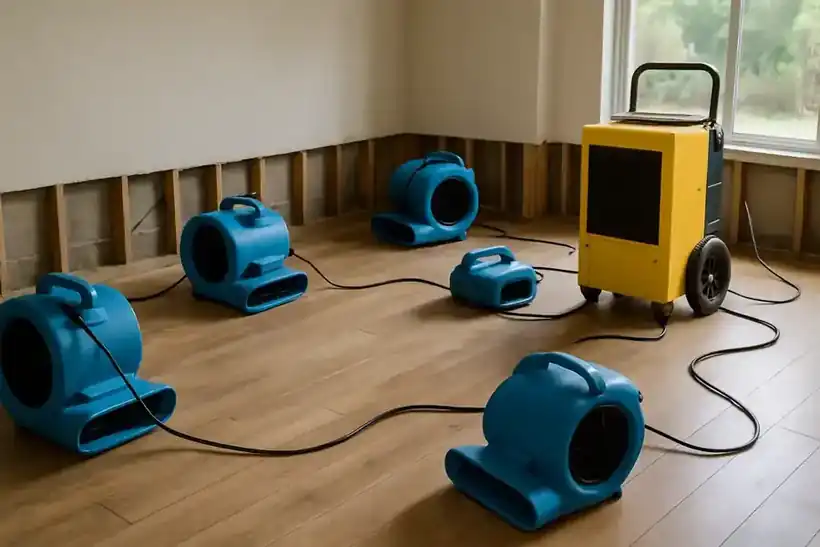
After the water is out, commercial air movers and dehumidifiers do the real drying. Wet baseboards and the bottom of soaked drywall get opened up so the wall cavity can dry from the inside. Carpet pad that held water usually comes out. The crew logs moisture readings each day until the materials hit a dry standard, not just a guess.
Once everything reads dry, repairs put the home back together: new drywall and insulation, flooring, trim, and paint. Working with one crew from extraction through rebuild keeps the timeline tight and keeps the insurance paperwork consistent from start to finish.
Working with your insurance
After a covered loss, the claim moves faster when the damage is documented from the start. A good crew photographs conditions before cleanup, writes a detailed scope, and logs daily moisture readings, which is exactly the evidence an adjuster wants. Keep your own photos and records too, and do not throw out damaged materials until they are documented. For sudden, accidental losses like a burst pipe, you typically pay your deductible while the policy covers the rest. Rising-water flooding is separate and needs flood insurance. Our <a href='/does-homeowners-insurance-cover-water-damage/'>insurance guide</a> walks through what is and is not covered in Houston.
Clean, grey, and black water
Not all water damage is equal, and the category drives the whole job. Clean water from a supply line or a fresh rain leak is the simplest, often dried in place with the structure saved. Grey water from an appliance or a backed-up sink carries some contamination and needs more cleaning. Black water from flooding, sewage, or a long-standing leak is a health hazard, and porous materials it soaked usually have to be removed. Part of a proper assessment is identifying which category you are dealing with, because treating black water like clean water leaves a contaminated home behind, and treating clean water like a tear-out wastes money you did not need to spend.
What the work includes
- Emergency water extraction
- Structural drying and dehumidification
- Moisture mapping and monitoring
- Mold prevention during drying
- Drywall, flooring, and trim repair
- Insurance documentation support
Water Damage Restoration FAQ
How long does water damage restoration take in Houston?
Most homes dry in three to five days, depending on how much water there was and what it soaked into. Hardwood, plaster, and water trapped behind walls take longer. Houston humidity can stretch drying time, which is why crews run dehumidifiers and verify with meters rather than calling it done early.
Will my homeowners insurance cover it?
Sudden, accidental water damage, like a burst pipe or a storm-driven roof leak, is usually covered. Slow, long-term leaks and surface flooding from a rising bayou often are not, unless you carry separate flood insurance. Document everything with photos before cleanup and read our insurance guide.
What should I do before help arrives?
If it is safe, shut off the water source and the power to wet rooms. Move what you can to a dry area and take photos of everything. Do not run a household vacuum over standing water. See our first-steps guide.
Water in your home right now?
Tell us what happened and where. We will get you fast water damage help from an experienced local crew across Houston, day or night.
817-660-4380