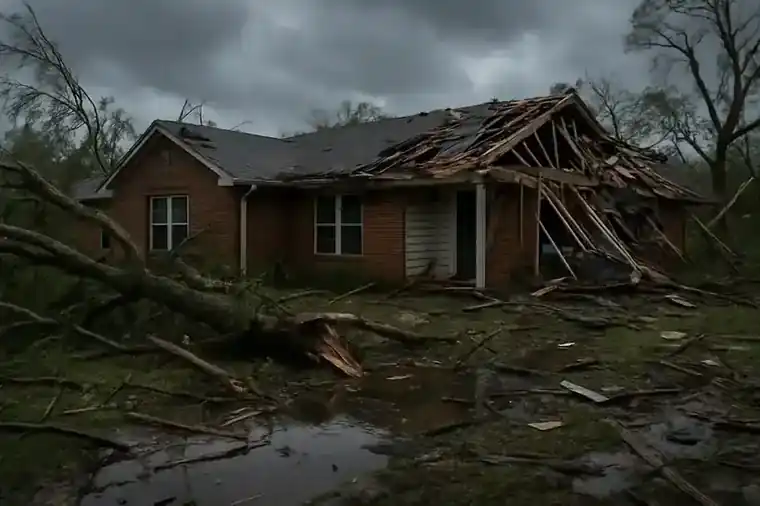
Storm Damage Water Removal in Houston, TX
Hurricane season runs June to November. When a storm pushes water in, get fast removal and drying.
Storm damage water removal is a Houston staple. Atlantic hurricane season runs June through November, and it does not take a named storm to flood a home here. A stalled thunderstorm can drop a foot of rain in hours, and wind-driven rain finds its way through roofs, windows, and doors. Call when the storm pushes water into your home. An experienced local restoration crew removes the water fast and dries the structure before mold and rot set in.
How storms get water into Houston homes
Roof damage is the first path: wind lifts shingles and flashing, and the next rain pours straight into the attic and ceilings. Wind-driven rain forces water around windows and doors that handle normal rain fine. Then there is rising water, when bayous and streets overtop and water comes in at floor level.
Each path needs a slightly different response, but they share one rule: the faster the water comes out and the drying starts, the less of your home you lose.
Fast removal and structural drying
Crews extract standing water, pull out soaked materials that cannot be saved, and set air movers and dehumidifiers to dry the structure. Storm jobs often involve a damaged roof or window, so tarping and board-up may come first to stop more water from entering while drying runs.
Moisture readings guide the work so hidden wet areas in walls and ceilings are found and dried, not sealed up to become next month's mold problem.
Houston's storm history is a warning
Tropical Storm Allison in 2001, the Memorial Day flood in 2015, the Tax Day flood in 2016, and Hurricane Harvey in 2017 each put huge numbers of Houston homes under water. The lesson homeowners took away is that fast response matters, and that having a number to call before the next storm saves days.
When the forecast turns, a quick call after the water gets in puts a crew on your home while the demand is highest and time matters most.
Documenting storm damage for your claim
Storm claims often turn on proving the cause. Wind-driven rain through a storm-damaged roof is usually covered by homeowners insurance, while rising water from flooding needs separate flood coverage, so clear documentation protects you. Before cleanup, photograph the roof or window damage, the water inside, and every affected room, and note the date and the storm. Keep receipts for emergency steps like tarping. Report the claim promptly and mitigate the damage, which your policy requires and which fast drying satisfies. A crew that documents the scope and logs moisture readings gives your adjuster the evidence to approve the work without delay.
After the storm passes
When a major storm hits Houston, demand for cleanup spikes all at once, and the homes that get help first are usually the ones whose owners act fast and document well. As soon as it is safe, photograph the damage inside and out, including the roof or window where water entered, and get standing water extracted before it sits. Tarping a damaged roof stops more water from coming in with the next band of rain, which is common in tropical systems. Move salvageable belongings to a dry area and lift them off the floor. Then focus on drying, because the same humidity that follows Gulf storms is what turns a wet house into a moldy one.
What the work includes
- Emergency storm water extraction
- Roof tarping and board-up
- Soaked material removal
- Structural drying
- Mold prevention
- Insurance documentation
Storm Damage Water Removal FAQ
What should I do first after storm flooding?
If it is safe, shut off power to flooded areas and avoid the water, which may be contaminated. Take photos for your claim, move valuables up, and call for extraction. Do not wait for the water to recede on its own in this climate.
Will insurance cover storm water damage?
Wind-driven rain through a storm-damaged roof is often covered by homeowners insurance, while rising-water flooding usually needs separate flood insurance. The cause matters, so document conditions carefully. See our insurance guide.
Can you help if my roof is still leaking?
Yes. Tarping and board-up stop more water from entering while drying begins, so the home is protected before the permanent roof repair happens.
Water in your home right now?
Tell us what happened and where. We will get you fast water damage help from an experienced local crew across Houston, day or night.
817-660-4380